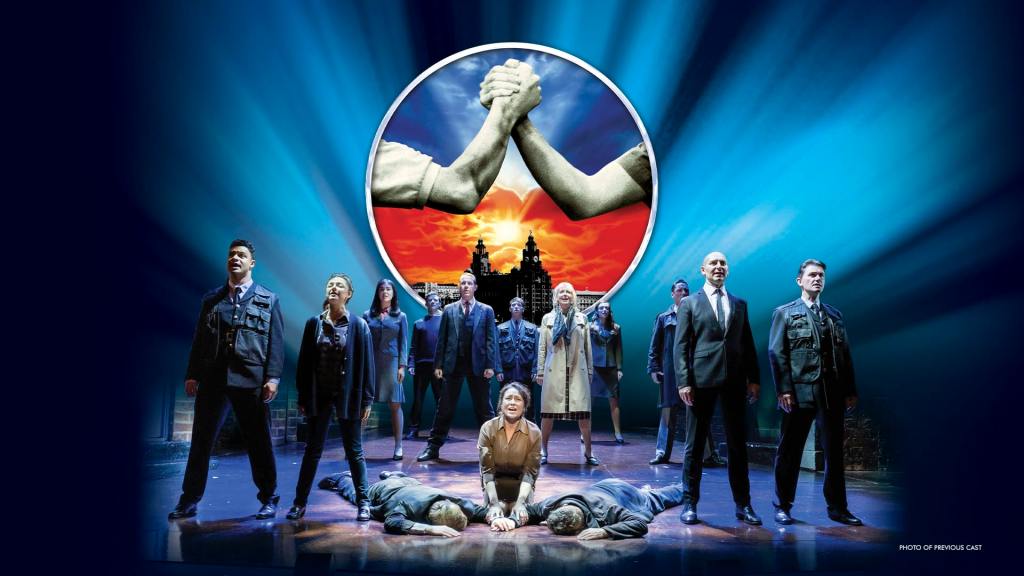

Blood Brothers hits hard, really hard.
Raw human emotion takes precedence over plot and production value in this play.
The show, set mostly against the backdrop of Liverpool in the 1970s, begins with the end – a bold choice but where the genius starts.
It works because this isn’t about the result but instead about how fate entwines the twins physically before dragging them apart.
Though the set art does an excellent job of creating an atmosphere matching the characters’ surroundings, the play transpires for the most part in regular homes or on the street. The everyday environments ensure that the dialogue and music are fully absorbed and the focus remains on the protagonists.
After the opening act, the play really gets going when a young Mickey, full of energy and spirit, bursts onto the stage and encaptures the senses of the audience.
Sean Jones, who is on his farewell tour after over 20 years in the role, nails the Scouse accent in Mickey’s various stages of growing up and still manages to portray the excited child with as much exuberance as ever.
Through an emphasis on body movement and facial expression, Jones’ depiction of Mickey, from child to troubled young adult, is exceptional from start to finish and showcases his acting versatility.
The pacing of a story that charts the passage of time can sometimes be a play’s downfall. However, Blood Brothers does it cleverly with the help of memorable motifs throughout. It’s easy to follow and when the speed does pick up in the final act, it serves to remind us how fast you grow up when times are tough.
It’s here where the friendship begins to crack as Mickey notices the harsh realities of the world. Class division was of no importance to them as children, however, social oppression now separates him and his brother, who hasn’t had to grow up seeing the difficulties of his alternative life.

Despite all the hardships faced, the final straw for Mickey is when fate comes back to meddle.
With brilliantly written jokes, the first part of the production is focused mainly on the joys of childhood freedom, however, social issues and the narrator’s foreboding presence offer constant reminders that somebody, at some point, has to pay a price. Even when the Johnstone family move to a new town on the edge of the city, that doesn’t work out in the long term.
While Willy Russell isn’t scared to set his writing within the specific context of his hometown, the rehousing of people from inner cities was a nationwide scheme in the 70s and many audiences across the country will relate to the characters’ experiences at some point in their lives.
That ability to relate and connect to the audience through mutual experiences and memories is what makes Blood Brothers so hard-hitting. The happy times are heart-warming but this just serves to make the lows lower.
The journey and classist prejudice that Mickey and his mother endure could easily be taken from a Ken Loach plot.
Russell’s commentary is more subtle, though.
What makes his work linger long after the curtains close is the brutal knowledge that the experiences Mickey, his mother and his partner go through were not and still aren’t unusual, 40 years after the show was first performed.
Mickey’s life may take place on stage, but his circumstances are a consequence of social deprivation, mental illness and emotional anguish in the real world.
 Mersey Music